Projects
Projects built
AI and software engineering work: agentic chatbots and RAG systems, multimodal document intelligence, backend platforms, post-training pipelines and computer vision on embedded hardware.
Featured work
The systems I am usually brought in to build
Agentic assistants, multimodal retrieval, deployment tooling and post-training pipelines. Each links to a public reimplementation of one question inside it, built from scratch on synthetic data.
- Platform Engineering
Pilot-to-Production Deployment Kit for LLM Rollouts
A reusable scaffold that takes an LLM pilot to production in days rather than months: authentication, tracing, an evaluation harness, a human-review interface and container deploys, in one template.
- Auth, tracing and structured logging wired in from the first commit
- Evaluation harness and human-review UI as part of the scaffold, not an afterthought
- Reused across three separate client engagements
Public version: the readiness checklist with each control ranked by incidents prevented per engineer-hour.
- Python
- FastAPI
- React
- LangGraph
- Docker
- AI Agents & RAG
Customer-Facing Agentic Assistant & RAG Knowledge Base
A multi-step agent over a large document knowledge base, with tool calling, conversation memory and retrieval, served over WebSockets with a review interface that keeps business users in the loop.
- Multi-step reasoning with tool calling and persistent memory
- Retrieval over a 10k+ document knowledge base
- Streaming WebSocket backend with a human review path
Public version: when the agentic retrieval loop is worth its cost, measured against single-shot RAG.
- Python
- LangGraph
- Pinecone
- FastAPI
- React
- RAG & Multimodal
Multimodal Document Intelligence (Vision-RAG)
Retrieval over the charts, tables and scanned files that block enterprise workflows, using visual embeddings instead of extracted text so layout and figures survive the retrieval step.
- ColPali visual-embedding retrieval over document images
- Measured against a text-only baseline rather than assumed better
- Vision-language model self-hosted on vLLM
Public version: which extraction approach per document class, and how each one fails.
- Python
- Qwen3-VL
- ColPali
- vLLM
- FastAPI
- LLM Engineering
Open-Weights LLM Post-Training & Safety Evaluation Pipeline
End-to-end adaptation of open-weights models, both supervised fine-tuning and preference optimisation, gated by capability evaluations and red-team suites rather than by inspection.
- Full-parameter and LoRA SFT with DPO and GRPO
- Multi-node distributed training via FSDP and Accelerate
- Capability evals plus refusal and jailbreak red-team suites before promotion
Public version: the memory arithmetic behind the training runs, what LoRA saves and what it cannot.
- Python
- PyTorch
- TRL
- LoRA
- DPO
- vLLM
5 projects
AI Agents & Voice Agents
Tool-using agents over MCP, orchestration that survives a restart, failure modes measured per topology, and streaming voice loops budgeted per hop.
- agent-eval-trajectory-vs-outcome
How often does an agent reach the right answer through a wrong process?
0.496 vs 0.000
An agent that never follows the correct process scores 0.496 on outcome and 0.000 on trajectory. Its mirror image scores 33.1 points lower on outcome than trajectory. The two metrics disagree in opposite directions.
- python
- pytest
- agentic-rag-knowledge-base
Does agentic multi-step retrieval beat single-shot RAG, and what does the loop cost?
+53.7 pp
Answerable rate on two-hop queries at a tight retrieval budget, for about twice the tokens. By k=5 the gain is exactly zero and the loop is pure overhead, so routing, not decomposition, is the design.
- python
- bm25
- rrf
- pytest
- llm-client-kit
Where does naive asyncio.gather collapse, and what does bounded concurrency buy at p95?
25%
Service time varies by at most this much across a 128x sweep of the concurrency limit, while p95 total moves by two orders of magnitude. Everything else was admission delay.
- httpx
- anyio
- pydantic
- pytest
- mcp-server-and-agent
What is each agent topology's failure rate, and does supervisor actually beat single-agent?
1.73x
Token cost of a supervisor topology over single-agent, for a 3.5-point failure-rate gain that two cheaper topologies both beat. On error cascades the supervisor is worse, because fresh contexts discard the error history.
- langgraph
- llm-client-kit
- fastapi
- voice-loop-latency-budget
Which hop dominates perceived voice latency, and what is the one optimisation that mattered?
70%
Share of perceived latency spent in ASR. Time-to-first-audio-chunk is what a user feels, not total audio duration.
- faster-whisper
- piper
- websockets
- llm-client-kit
4 projects
RAG & Multimodal AI
Hybrid retrieval with re-ranking, vector index internals, and extraction over documents and images where the input is not clean text.
- doc-extraction-ocr-vs-vlm
Which extraction approach for which document class, and what does each lose when it fails?
+86.7 pp
Layout-aware reading over text extraction on charts, and +73.6 on tables, but 4.7 points worse on photographed pages. The deliverable is a routing table, not a winner.
- python
- pytest
- rag-eval-retrieval-vs-generation
Would a single end-to-end RAG score have hidden a real regression?
0.083
Retrieval recall drops by this much with an interval excluding zero, a real regression. The blended end-to-end score falls 0.021 with an interval that includes zero, so it reports no change. A team gating on the blend ships it.
- python
- faiss
- llm-eval-harness
- llm-client-kit
- retrieval-internals-and-tuning
At what latency budget does re-ranking stop being worth it?
0.020
Post-filter recall at a 3.1% selective filter, where 82% of queries return nothing. Exact pre-filtering stays at 1.000. The failure is silent, which is what makes it dangerous.
- pgvector
- faiss
- rank_bm25
- sentence-transformers
- edge-detection-tracking-jetson-notes
What does INT8 quantization cost in mAP, and what could not be verified without a Jetson?
1.16 pp
[email protected] cost of INT8 quantisation for a 3.51x smaller model. On 94 images the intervals overlap, so the weaker claim is the defensible one.
- ultralytics
- onnxruntime
- opencv
- cpp
3 projects
Software Engineering & Platforms
The services around the model: async APIs under load, gateways and caching, queue semantics, and schemas read against their query plans.
- llm-deployment-kit
What does an LLM pilot need before production, and which controls are worth adding first?
32.7%
Share of requests carrying a silent error on a pilot shipping only timeouts, against 3.0% failing visibly. Each of the eight controls is ranked by incidents prevented per engineer-hour. Schema validation wins, and it is not what most teams add first.
- python
- pytest
- inference-gateway
At what monthly request volume does self-hosting beat the API?
0.031
Separation AUC for the semantic cache, against 0.5 for random. The ranking is inverted. No threshold beats never caching, so the tier ships disabled.
- fastapi
- redis
- postgres
- llm-client-kit
- claims-pipeline-reference
Which index change moved p95, and what does the query plan show before and after?
3,000,000
Synthetic claims in Postgres, with the query plan captured before and after. The obvious index on provider_id alone is a real improvement and still wrong: it finds the rows without supplying the ordering, so the sort node stays. A composite covering index removes both.
- fastapi
- postgres
- redis
- arq
7 projects
LLM Engineering & Evals
Adapting open-weights models to a domain, and the measurement discipline that decides whether a change shipped an improvement or a regression.
- sft-loss-masking-and-packing
How much does sequence packing without attention-mask correction actually cost?
+0.1071
Eval-loss penalty for a naive packed mask, interval [+0.0783, +0.1408] excluding zero. The construction argument is stronger still: 11,908,892 query/key pairs cross a document boundary where a correct mask permits none.
- pytorch
- transformers
- trl
- rl-environment-for-rubric-graded-tasks
What reward hack did the optimiser find, and what environment change closed it?
3 at 1.000
Three answer strategies that answer nothing all tie an honest answer at 1.000 against a naive rubric grader. Deduplication, the obvious first fix, closes none of them.
- python
- pytest
- guardrail-transfer-study
How much of an apparent cross-modal safety gap is a reading-ability artifact?
100% artifact
A safety evaluation reports up to 12.2 points of apparent difference on a model whose alignment does not vary at all. Where a real gap exists the same confound understates it by 11.6 points, so the bias has no consistent direction.
- python
- pytest
- peft-lora-memory-and-quality
Does LoRA's memory saving match the closed-form prediction, and which term does it fail to reduce?
1,178x vs 5.97x
LoRA trains 1,178x fewer parameters and saves 5.97x the memory. The gap is the frozen base weights, which are 99.6% of the LoRA budget, so rank is not the memory knob.
- python
- pytest
- llm-eval-harness
How far can an LLM judge be trusted, measured against human labels?
0.710
Cohen's kappa for a judge agreeing with a human 86% of the time. A coin-flip judge agrees 50% of the time and scores 0.008, which is why calibration is reported as kappa, not accuracy.
- python
- pydantic
- scipy
- pytest
- preference-optimization-landscape
Which preference-optimisation method for which situation, and what does each give up?
IPO does not saturate at all
Seven objectives implemented from the loss function up, every gradient verified against autograd. The behaviours diverge: cDPO saturates before DPO, while IPO past its target margin pushes the margin back down, the only objective here that reverses direction.
- pytorch
- trl
- transformers
- synthetic-data-pipeline
What fraction of a generated set is contaminated against the eval set before decontamination?
58.3%
Detector recall on planted contamination. Every span of 13+ tokens was caught and every shorter span was missed, with zero exceptions, so a clean 13-gram report means no leaked long span, not no leakage.
- datasketch
- fasttext
- llm-client-kit
7 projects
AI Internals & Optimisation
What a token costs and why: attention and KV cache arithmetic, quantisation trade-offs, and the prefill/decode split that governs serving economics.
- speculative-decoding-when-it-pays
At what batch size does speculative decoding stop paying for itself?
b=5 to never
The crossover depends entirely on the model pair, batch 5 for a weak draft, never for a strong one. Anyone quoting a single batch size is quoting a number about their own draft model.
- python
- pytest
- llm-serving-benchmark
Which serving config meets a stated SLO at the lowest cost per million tokens?
3.88s p99
The cheapest configuration in the table misses a 2s SLO at $0.56 per million tokens. Holding the line costs $0.71, which is 27% more and is the price of the SLO stated rather than discovered in production.
- python
- pytest
- attention-kv-cache-from-scratch
What did grouped-query attention actually buy, in concurrent sequences?
62 vs 15
Concurrent sequences for Llama-3-8B at 8k on one H100, with grouped-query attention and without. A 4x throughput gap from one architectural choice.
- numpy
- pytorch
- pytest
- prefill-decode-roofline
Where does the measured bandwidth fall short of theoretical peak, and why?
1024x
Prefill's arithmetic intensity over decode's at 1024 tokens. Decode does two FLOPs per two-byte weight, an intensity of ~1 by construction, below every published ridge point.
- pytorch
- matplotlib
- moe-vs-dense-serving-profile
Why do active parameters mislead capacity planning for a sparse model?
5.9x
Resident-memory ratio between an MoE and a dense model that agree within 8.9% on active parameters. 5.40x of the MoE's weights are resident but idle per token, and that ratio survives quantisation.
- transformers
- pytorch
- quantization-accuracy-curves
How much does the calibration set choice change the measured degradation?
61.9x
How much more the calibration corpus is worth than a whole step of quantisation level. The ladder is also not monotone: Q5_K degrades 1.53% against Q6_K's 2.15%.
- autoawq
- vllm
- llm-eval-harness
- context-extension-and-long-context-eval
How far short of advertised context does effective context actually fall?
100% vs 17%
Needle-in-a-haystack against a two-hop task on the same haystack at 1k tokens. The separation is complete where length cannot be the constraint, so a passing NIAH score licenses no conclusion about composition.
- pytorch
- transformers
- llm-eval-harness
Earlier engineering
Perception, robotics and on-device inference
Applied systems work written up at length: what was built, how it was validated, and where it fell short.

Computer Vision & AI
Cancer Detection Model
A convolutional network for early skin-cancer detection on the HAM10000 dataset, built around an EfficientNet-B4 backbone with spatial and channel attention, Grad-CAM explanations, and five-fold stratified cross-validation.
TensorFlow, CNN, Transfer Learning
Read the write-up
Robotics & Computer Vision
Autonomous Drone Vision
A real-time aerial detection stack running YOLOv9 on NVIDIA Jetson through TensorRT, with DeepSORT tracking, CUDA preprocessing and ROS2 integration on a custom drone platform.
YOLOv9, NVIDIA Jetson, TensorRT
Read the write-up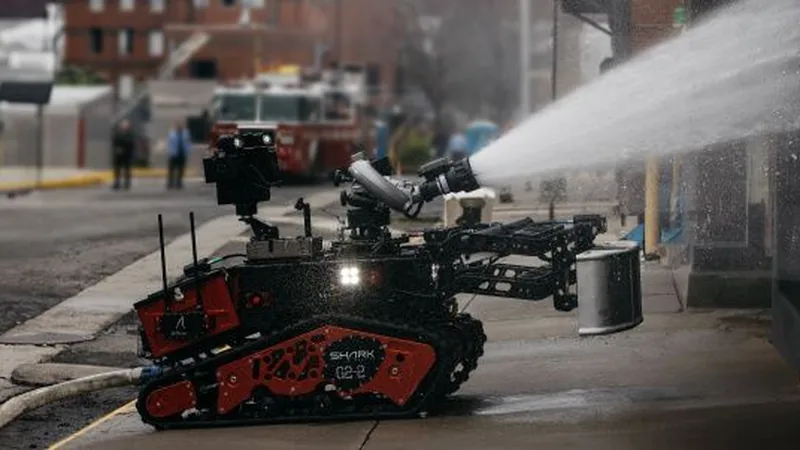
Robotics Engineering & AI
Autonomous Fire Fighter Robot
An autonomous ground robot combining YOLOv8 flame detection with LiDAR SLAM and A* path planning, navigating to and suppressing fires in cluttered indoor environments.
YOLOv8, ROS2, SLAM, Embedded Systems
Read the write-up
AI Assistant & NLP
Mini AI Assistant
A local-first assistant built on DistilBERT intent classification and BiLSTM-CRF entity extraction, exported to ONNX for on-device inference on desktop and Raspberry Pi.
Python, BERT, TensorFlow
Read the write-up
Contact
Get in touch
Happy to talk about anything here, or about LLM systems, evaluation and serving generally. Mentioning a repository by name gets you a faster and more useful answer.
- Based in
- Abu Dhabi, UAE
- GitHub
- github.com/malcomzww
- linkedin.com/in/malcomzw